You open your fridge to grab some milk, and it feels warm. Your ice cream in the freezer is still rock solid, but your milk, eggs, and leftovers are sitting in a fridge that feels more like room temperature than a cold storage box. It’s confusing, it’s frustrating, and it’s making you wonder if all your food is about to go to waste.
If this sounds like you, don’t worry. This is one of the most common refrigerator problems, and in most cases, it can be fixed. Let’s walk through why this happens and what you can do about it.
Why Does This Happen?
Your fridge and freezer share the same cooling system, but they don’t always fail together. Here are the most common reasons your freezer stays cold while your fridge doesn’t.
1. Blocked Air Vents
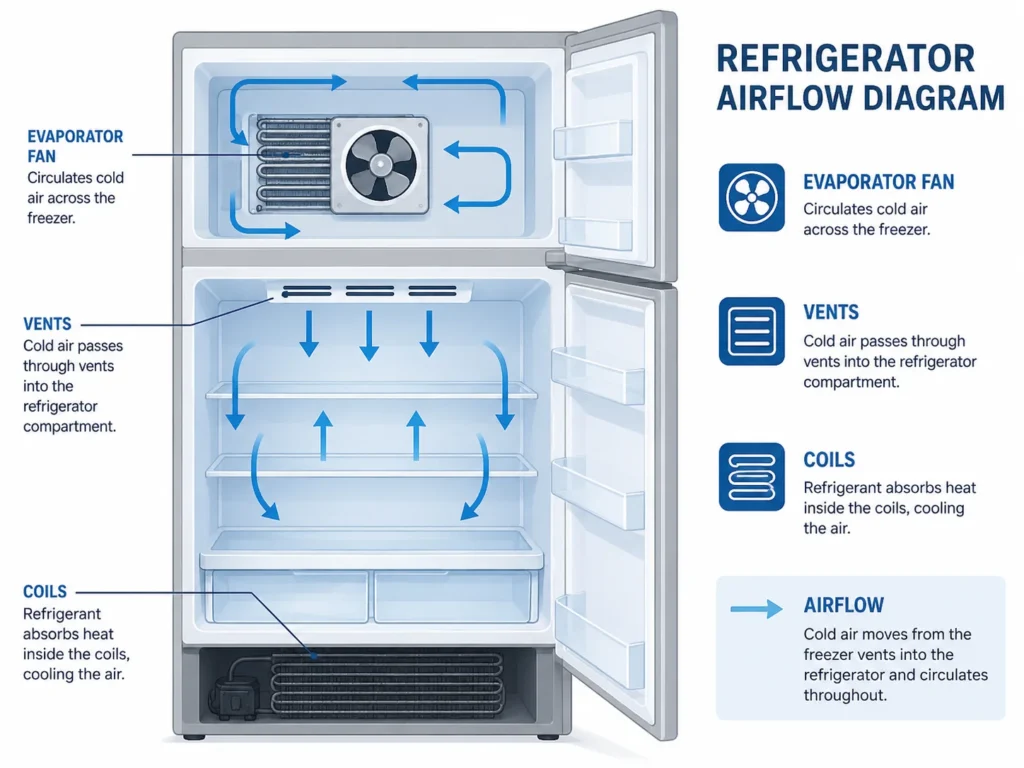
Most refrigerators use a single evaporator fan to pull cold air from the freezer into the fridge section through small vents. If these vents are blocked by food packages, ice buildup, or frost, cold air can’t reach your fridge.
What to check: Look inside your freezer for the vents (usually on the back wall) and make sure nothing is blocking them.
2. Faulty Evaporator Fan
The evaporator fan pushes cold air into the fridge. If this fan is broken, worn out, or jammed, your freezer will stay cold since it’s closer to the cooling source, but your fridge will warm up.
Sign to look for: If you don’t hear a light humming sound when the freezer door is open, the fan may not be running.
3. Frost Buildup on the Evaporator Coils
If your defrost system isn’t working properly, ice can build up on the evaporator coils. This ice blocks airflow and stops cold air from moving into the fridge.
Sign to look for: Excess frost or a thick layer of ice inside the freezer walls.
4. Damaged Door Seals (Gaskets)
Worn out or loose door seals let warm air sneak into the fridge. Your system then has to work harder, and sometimes it can’t keep up, especially in the fridge compartment.
What to check: Close the door on a piece of paper. If you can pull it out easily, your seal may need replacing.
5. Thermostat or Control Board Issues
Sometimes the temperature control thermostat fails to signal the fan or compressor correctly. This can cause an imbalance where the freezer cools normally, but the fridge does not get enough cold air.
What You Can Do Right Now
Before calling a technician, here are a few quick steps you can try:
- Check and clear the vents inside your freezer.
- Remove any items blocking airflow.
- Check the door seals on both the fridge and freezer.
- Unplug the fridge for 10 minutes to reset the system, then plug it back in.
- Wait 24 hours after any change before checking the temperature again.
If your fridge is still not cooling after trying these steps, the issue is likely a mechanical part, like the evaporator fan, defrost system, or thermostat, that needs professional repair.
Should You Worry About Your Food?
Yes, a little. If your fridge temperature has been above 40°F for more than two hours, it’s safer to throw out perishable items like dairy, meat, and leftovers. When in doubt, don’t take the risk.
Repair Cost Estimates
Repair costs depend on what’s actually broken. Here’s a general idea of what to expect:
- Blocked or frosted vents (cleaning/defrosting): $0 – $100 (often a simple service call)
- Door seal/gasket replacement: $100 – $250
- Evaporator fan motor replacement: $150 – $350
- Defrost system repair (heater, thermostat, or timer): $200 – $400
- Control board replacement: $300 – $600
These are typical ranges and can vary based on your fridge’s brand, model, and age. A technician can give you an exact quote after inspecting your unit.
When to Call a Professional
Some fixes you can try yourself, but others need an expert. Call a professional if:
- You’ve cleared the vents and checked the seals, but the fridge is still warm after 24 hours.
- You hear unusual noises like clicking, buzzing, or no fan sound at all.
- You see heavy frost or ice buildup that keeps coming back even after defrosting.
- Your fridge is more than 8-10 years old and this isn’t the first cooling issue.
- You’re not comfortable checking electrical parts like the fan motor or control board yourself.
Trying to fix electrical components without experience can be risky and may cause more damage. When basic troubleshooting doesn’t work, it’s safer and often cheaper in the long run to call a technician before the problem gets worse.
Frequently Asked Questions
Can a warm fridge damage my food?
Yes. Bacteria grow quickly above 40°F. If your fridge has been warm for more than two hours, it’s best to discard perishable food.
Why is only my fridge warm and not my freezer?
This usually means cold air isn’t reaching the fridge section, often due to a blocked vent, broken fan, or frost buildup on the coils.
How long can I wait before calling a repair technician?
If basic checks like clearing vents and door seals don’t fix the problem within 24 hours, it’s time to call a professional before you risk losing more food.
Is this an expensive repair?
It depends on the cause. A blocked vent costs nothing to fix, while a broken evaporator fan or control board will need a technician and replacement parts.
Need Help in Naperville?
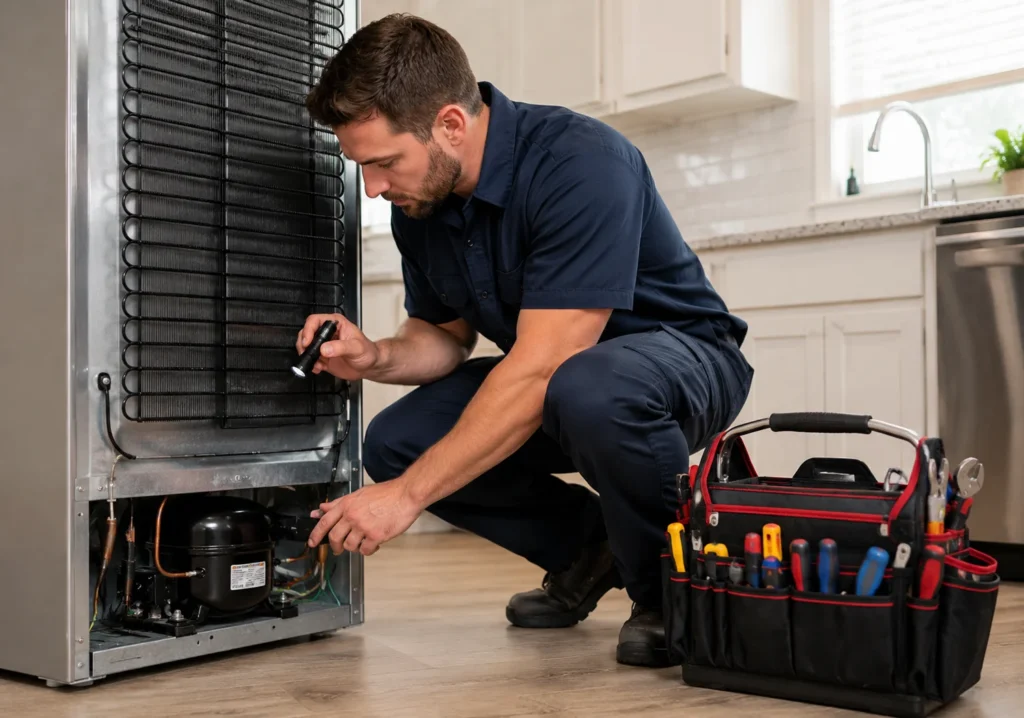
If your fridge is warm but your freezer is working fine, and the quick fixes above didn’t solve the problem, it’s time to bring in a professional. Our technicians in Naperville have years of experience diagnosing and repairing this exact issue, often on the same day you call.
Don’t let your food go to waste. Reach out to us today, and we’ll get your fridge back to keeping everything cold and fresh.